Strengthening the participation of community mechanisms and the role of women human rights defenders in the peace consolidation process in the North-West and South-West Regions of Cameroon.

Strengthening the participation of community mechanisms and the role of women human rights defenders in the peace consolidation process in the North-West and South-West Regions of Cameroon.

Problem Analysis

The ongoing socio-political crisis in Cameroon’s North-West and South-West (NWSW) Regions has resulted in one of the most devastating humanitarian situations in the country’s history. What began as peaceful protests rapidly escalated into protracted armed conflict, leading to widespread insecurity, displacement, and the breakdown of social cohesion. Over 700,000 people were internally displaced, with many fleeing to urban centers like Douala in the Littoral Region in search of safety and livelihood opportunities. Among these displaced populations, women and girls bore the brunt of the conflict’s consequences, facing heightened risks of sexual and gender-based violence (SGBV), economic exploitation, and social exclusion.

The displacement fractured families and eroded traditional protection structures that once safeguarded women and children. With limited access to justice and formal support services, survivors of violence were left to navigate trauma, stigma, and poverty on their own. Host communities—already struggling with limited resources—became overwhelmed by the sudden influx of internally displaced persons (IDPs), increasing tension and competition for basic services such as housing, healthcare, and employment. Within this context, gender inequality and weak community protection mechanisms further deepened the vulnerability of women, girls, and persons with disabilities.

The crisis also disrupted the presence and functionality of community-based peace and protection mechanisms. Women human rights defenders, who had long played essential roles in community mediation and advocacy, found themselves silenced or endangered. The absence of structured psychosocial and legal support left victims of violence with minimal recourse to justice. Fear of stigma and reprisal prevented many survivors from reporting abuse or seeking help. Simultaneously, men and boys—often viewed only as perpetrators—were largely excluded from awareness and prevention efforts, perpetuating harmful social norms and gender stereotypes.

Amid these challenges, LUKMEF-Cameroon, with support from the United Nations Peacebuilding Fund (PBF), launched the project “Strengthening the participation of community mechanisms and the role of women human rights defenders in the peace consolidation process in the North-West and South-West Regions of Cameroon.” The project sought to rebuild community trust, enhance local protection networks, and restore the dignity and agency of survivors of gender-based violence.

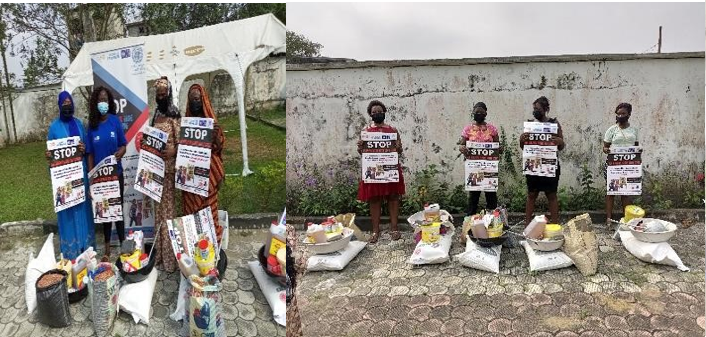
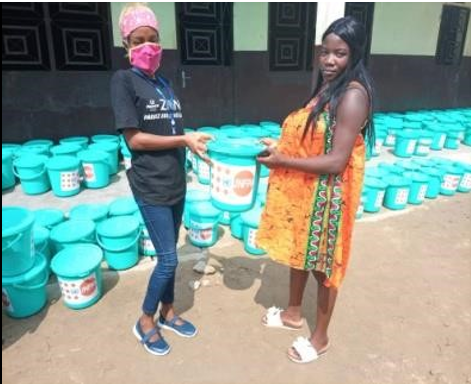
Through a combination of awareness raising, capacity building, service provision, and economic empowerment, the project addressed the multi-layered vulnerabilities of IDPs and host communities. Over 8,000 people—majority women and youth—were sensitized on GBV prevention and response; 291 survivors received case management and psychosocial support; 395 women and girls benefited from dignity kits, while many others received livelihood and reintegration support. These interventions not only alleviated immediate suffering but also strengthened local capacities for peace, protection, and resilience.

The project demonstrated that empowerment and healing are achievable even in contexts of protracted crisis when interventions are community-led, gender-responsive, and rights-based. By restoring dignity to survivors, amplifying the voices of women human rights defenders, and promoting dialogue among men, boys, and community leaders, LUKMEF-Cameroon contributed meaningfully to peacebuilding and social cohesion in crisis-affected communities.

The results of this project simply demonstrate how much impact can be achieved when resources meet the will. However, the scale of need remains immense. To consolidate and extend these gains, LUKMEF-Cameroon calls on development partners, donors, and stakeholders to scale up or replicate this initiative across other affected regions of Cameroon.

For partnership and collaboration:
📩 Email: partnerships@lukmefcameroon.org
📞 Tel/WhatsApp: +237 677 947 449

Strengthening the participation of community mechanisms and the role of women human rights defenders in the peace consolidation process in the North-West and South-West Regions of Cameroon.

Start Date

20210301

End Date

20250601

Budget

56.000

Donor

United Nations Peacebuilding Fund (PBF)

Coordinator

Mr Stephen

Sector

Related Pillars

Related SDGs

Region

  • Littoral

Localities

The project was implemented in Wouri Division, specifically across Douala I, Douala II, Douala III, and Douala IV Subdivisions, targeting IDP and host communities in Bonaberi, Bonamikano, Mboppi, Ancienne Route, and surrounding neighborhoods.

Beneficiaries

  • Over 8,000 beneficiaries were directly reached through sensitization and GBV response activities.
  • Women and girls formed over 65% of all direct beneficiaries.
  • Persons with disabilities (PWDs) were systematically included — approximately 8–10% of total participants.
  • The project significantly enhanced access to justice, psychosocial support, and livelihood reintegration for GBV survivors in the Douala metropolitan area.
  1. Enhance the participation of women and community structures in peacebuilding: Strengthen the role and engagement of women human rights defenders, community-based organizations, and local protection mechanisms in promoting peace, social cohesion, and gender equality in crisis-affected communities.
  2. Reduce gender-based violence and improve access to justice for survivors: Increase awareness on GBV prevention, provide psychosocial, legal, and health support to survivors, and strengthen community referral and protection systems to ensure timely response and justice.
  3. Empower women and girls economically and socially: Support women and girls—especially IDPs and survivors of GBV—with livelihood skills, start-up kits, and financial assistance to enhance their resilience and independence.
  4. Promote gender-responsive community engagement and behavioral change: Engage men, boys, and community leaders in discussions and activities that challenge harmful social norms, foster positive masculinity, and support gender equality.
  5. Build the capacity of local actors and structures for sustainable GBV prevention and response: Train community relays, women-led organizations, and local authorities on communication, case management, and coordination mechanisms for prevention and care of GBV survivors.
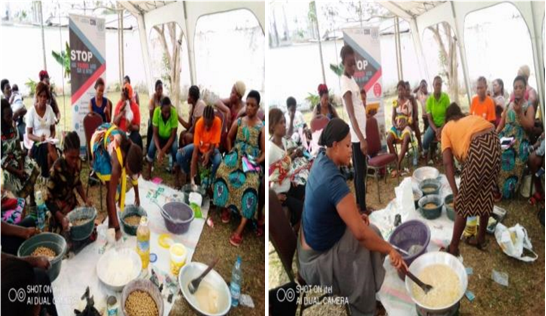
The project significantly enhanced protection, awareness, and empowerment for survivors of Gender-Based Violence (GBV) in Douala I–IV. A total of 8,029 individuals benefited from sensitization activities promoting access to justice and gender equality. 291 survivors received case management, with 125 GBV-related and 166 non-GBV cases managed. Over 395 women and girls received dignity kits, and 151 were trained in income-generating activities like soap, cake, and vinegar production. Additionally, 17 women received cash vouchers, while 25 women obtained economic kits to start businesses. The project produced and distributed 5,000 referral circuits and 350 copies of GBV legal texts to raise awareness. It also strengthened 21 women-led organizations and 25 community relays to prevent and respond to GBV. Through psychosocial support, livelihood assistance, and sensitization, survivors regained dignity, improved well-being, and reduced vulnerability to abuse and economic dependence.
The project faced several operational and contextual challenges. Distance to safe spaces limited survivors’ access to services, particularly in vast areas like Douala III and IV. Transportation costs further discouraged participation, while resistance from certain communities led to hostility toward mobilizers and destruction of GBV awareness materials. Weather conditions, especially heavy rains, often disrupted sensitization and distribution activities. The increasing demand for psychosocial support and dignity kits exceeded available resources, revealing a need for expanded coverage. Additionally, limited shelter facilities, particularly in Douala III, posed challenges in providing safe accommodation for survivors. Coordination among stakeholders sometimes proved difficult due to differing operational capacities. These constraints slowed implementation and reduced outreach efficiency. Despite the hurdles, the project’s flexibility, strong partnerships, and dedicated field teams ensured that survivors continued to receive critical assistance and empowerment services across target communities.
Implementation revealed that addressing GBV in a development context differs greatly from humanitarian settings, requiring flexibility and adaptation to local realities. The inclusion of men and boys in sensitization programs enhanced understanding of gender dynamics and fostered community-wide support for GBV prevention. Collaboration with local organizations and authorities proved essential in promoting trust, effective outreach, and sustainability. The use of community relays and volunteers ensured better identification and referral of survivors, while livelihood training demonstrated the importance of economic empowerment in reducing vulnerability. The project also learned that cultural sensitivity and community engagement are vital for changing attitudes toward GBV. Moreover, the integration of psychosocial, legal, and economic support improved survivors’ recovery and reintegration. Overall, holistic, inclusive, and community-driven approaches proved most effective in strengthening the protection and empowerment of women and girls in fragile urban settings.
Future GBV interventions should expand safe spaces and establish additional shelters, especially in Douala III, to improve accessibility for survivors. Providing transportation or mobile outreach services will help reach those in distant or insecure areas. Greater investment in psychosocial support and livelihood programs is recommended to meet the high demand for economic and emotional rehabilitation. Continuous capacity building for community relays, volunteers, and women-led organizations should be prioritized to sustain awareness and response mechanisms. Engaging men, boys, and community leaders in advocacy efforts will further strengthen local ownership and reduce resistance to GBV interventions. Collaboration with government agencies and health institutions should be deepened to ensure survivors’ access to justice, healthcare, and social reintegration. Finally, enhancing data collection and monitoring systems will improve reporting accuracy and inform evidence-based programming, ensuring long-term impact and sustainability of GBV prevention and response initiatives.

Success Stories

Mary’s Journey from Rejection to Renewal
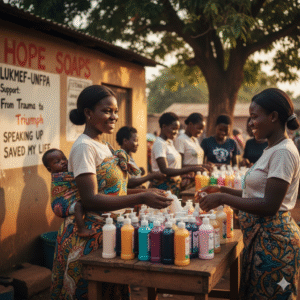
Mary (not her real name), an adolescent girl displaced from the North West Region due to the crisis, faced unimaginable hardship after becoming pregnant. The father denied responsibility, and her mother, overwhelmed and ashamed, forced her out of their home. Alone and frightened, Mary found herself sleeping on the streets of Douala. Her despair could have led to tragedy—but fate intervened. During a community outreach session, a national volunteer identified her situation and referred her to the Hope Centre Bonamikano (Safe Space), supported by LUKMEF and UNFPA/PBF. There, she finally found safety, care, and compassion. She received psychosocial support, a dignity kit, and antenatal care—her first ever medical check-up since becoming pregnant. The project’s social workers also reached out to her mother, explaining the risks of rejection and isolation. Moved and remorseful, her mother reunited with Mary. With time, Mary’s physical and emotional health improved. She safely delivered her baby and was later trained in income-generating skills to regain financial independence. Today, Mary is a symbol of resilience and hope, proving that when communities show compassion, lives can be rebuilt.

Lynn’s Triumph Over Trauma

Lynn (a pseudonym), an orphaned internally displaced student, came to Douala seeking safety and education. Living with distant relatives, she became a victim of rape by intruders in her residence. Traumatised, sleepless, and pregnant, Lynn was consumed by fear and shame. She might have been lost in silence forever—but her story took a turn when a teacher, equipped with a referral pathway from the GBV project, directed her to the Hope Centre Bonamikano. At first, Lynn could barely speak. With patience and continuous psychosocial support from trained counselors, she slowly regained confidence. Through the UNFPA-MHPSS program, she received trauma therapy, antenatal care, and later joined livelihood training in liquid soap production. Equipped with start-up materials and mentorship, Lynn began producing and selling her products. Now financially stable and emotionally healed, she cares for her baby and inspires other young survivors. “You gave me hope when I had given up,” she said. “Speaking up saved my life.”

Comfort’s Economic Rebirth

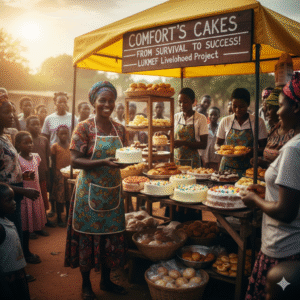
Comfort, a displaced woman from the North West Region, arrived in Douala with nothing but the will to survive. Having fled violence, she found herself without income, housing, or social support. When project mobilizers visited her neighborhood, Comfort joined one of the livelihood training sessions. She chose cake baking as her preferred skill. After the training, she received an economic kit containing all materials she needed to start a small baking business. With mentorship and guidance, Comfort started producing cakes for her community, gaining loyal customers who admired her determination. Her business flourished so quickly that she began training two other women, creating a ripple effect of empowerment. Comfort’s success story reflects the project’s long-term vision—transforming survivors of GBV into independent entrepreneurs. “I no longer depend on others for survival,” she shared proudly. “Today, I stand tall as a woman who overcame.”

A New Dawn for Beatrice

Beatrice, a woman living with a disability, faced daily stigma and vulnerability in her host community in Douala II. Before the intervention, she was often excluded from social gatherings and had little awareness of her rights. When the GBV project introduced inclusive training sessions and awareness campaigns, Beatrice participated actively. Through psychosocial support and training on powder detergent production, she discovered her potential. The project’s inclusive approach provided her not only the materials but also the confidence to start her own small-scale business. Beatrice now produces and sells detergent in her neighborhood, earning enough to support her basic needs. She became an advocate for other women with disabilities, joining a local association of physically challenged women supported by LUKMEF. Beatrice’s transformation demonstrates that empowerment has no limits. “Before, I was invisible,” she said. “Now, people see my strength, not my disability.”

Grace’s Path to Peace and Dignity

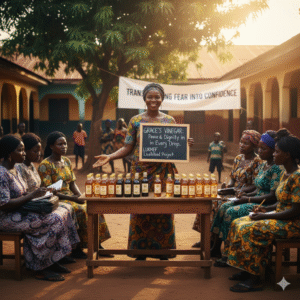
Grace, a single mother and internally displaced woman, was struggling to provide for her two children in Douala IV. Living in unsafe conditions, she often faced harassment and lived in constant fear. When she joined a community sensitization session on GBV, she learned about the Hope Centre and the available support for women like her. After seeking help, Grace received psychosocial counseling, participated in training on vinegar production, and was later supported with a cash voucher worth 109,000 CFA francs to start a microbusiness. Her dedication turned this modest support into a thriving local enterprise. Today, Grace not only sustains her family but also mentors other women on financial independence. She often says, “The project didn’t just give me money; it restored my dignity.” Her story encapsulates the program’s impact—transforming fear into confidence, dependency into self-reliance, and survivors into leaders of change.