Civil Society Strengthening for Effective Engagement in Holistic Human Development in Cameroon (with focus on rural and semi-urban communities including those affected by crisis

Civil Society Strengthening for Effective Engagement in Holistic Human Development in Cameroon (with focus on rural and semi-urban communities including those affected by crisis

WHY THIS INITIATIVE WAS NEEDED!

Strengthening Civil Society in Crisis-Affected Communities of Cameroon

Cameroon’s North West and South West regions have, for the past several years, been engulfed in an armed conflict that has disrupted every fabric of community life. Once-thriving towns and villages have been reduced to shadows of their former selves. Local economies have collapsed, schools have been shut down, health facilities abandoned, and entire communities displaced. The humanitarian toll has been devastating — families uprooted, children denied education, women subjected to heightened vulnerabilities, and men struggling to provide or even survive. Amidst this chaos, the role of civil society organizations (CSOs) has become ever more critical.

Yet, paradoxically, at the moment when their presence is most needed, many of these local CSOs have remained weak, fragmented, and under-resourced. Despite their proximity to affected populations and their deep understanding of local realities, most CSOs in the North West and South West (NWSW) regions have lacked the institutional and operational capacities required to effectively engage in humanitarian action, peacebuilding, and development. Their leaders often lack training in project management, reporting, fundraising, and monitoring and evaluation  key competencies necessary to attract donor confidence and manage resources transparently.

Moreover, the ongoing conflict has further marginalized rural and semi-urban communities, leaving many organizations isolated and unable to connect with national or international support systems. Insecurity has restricted mobility, and limited digital literacy has hindered online networking and fundraising. As a result, many well-intentioned local initiatives have failed to take off or sustain impact, not because of lack of will, but because of lack of capacity and opportunity.

At the same time, foreign aid structures have traditionally prioritized large, urban-based NGOs or international agencies, leaving grassroots organizations in crisis-affected areas underfunded and under-recognized. This has created a significant development gap: local actors who best understand their communities’ needs are sidelined, while projects designed externally often struggle to achieve deep or lasting impact.

It was within this complex and fragile context that the LUKMEF-Cameroon Civil Society Strengthening Project, funded by the Canadian Fund for Local Initiatives (CFLI), was conceived. The project sought to build the institutional and operational capacities of local CSOs to become more accountable, effective, and self-sustaining agents of change. By equipping 35 CSOs through training and mentoring, and supporting 12 of them with small grants, LUKMEF helped transform local organizations from passive observers into proactive development actors. Through hands-on training in areas such as project management, monitoring and evaluation, proposal writing, gender mainstreaming, and financial accountability, the project bridged a critical gap in local governance and humanitarian response.

In addition, the project leveraged media  including 20 TV and online programs to amplify voices for peace, gender equality, and human rights. It catalyzed the formation of regional CSO networks and digital communities that now connect over 1,000 organizations across Cameroon’s four regions. These results demonstrate not only the resilience of local actors but also the enormous potential that lies within community-based organizations when they are empowered with the right tools and opportunities.

The results of this project simply demonstrate how much impact can be achieved when resources meet the will. The success of this initiative stands as a testament to what is possible when development partners invest in local capacity as a foundation for sustainable peace and progress.

To scale up or replicate this model in other crisis-affected areas of Cameroon and beyond, LUKMEF-Cameroon invites development partners, donors, and institutions to collaborate with us. Together, we can build resilient communities through empowered local actors.

📧 Contact: partnerships@lukmefcameroon.org
📞 Tel/WhatsApp: +237 677 947 449
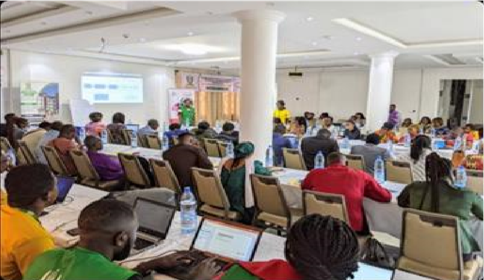
Civil Society Strengthening for Effective Engagement in Holistic Human Development in Cameroon (with focus on rural and semi-urban communities including those affected by crisis

Start Date

End Date

Budget

Donor

Canadian High Commission in Cameroon through the Canadian Fund for Local Initiatives (CFLI)

Coordinator

Bate Godwill Bate

Sector

Civil society strengthening

Related Pillars

Related SDGs

Region

  • North West
  • South West
  • West
  • Littoral

Localities

The CFLI Civil Society Strengthening Project was implemented across four key regions of CameroonNorth West, South West, West, and Littoral — with activities targeting rural and semi-urban communities, particularly those impacted by the crisis. The project strengthened local CSOs working in these communities to improve their institutional capacity, promote peacebuilding, gender equality, and enhance local development outcomes.

Beneficiaries

The project directly benefited 70 individuals from 35 CSOs and provided small grants to 12 organizations. Over 1,000 additional CSOs were reached through regional and online platforms. Women and youth were key participants, though data on disability was not specified. Activities spanned the North West, South West, West, and Littoral regions.
  1. To Strengthen the Institutional and Operational Capacities of Local CSOs
    • Build the skills and competencies of community-based organizations in the areas of project management, financial accountability, reporting, and organizational governance.
    • Enable CSOs to operate more effectively and transparently, thereby enhancing their credibility and sustainability.
  2. To Enhance CSO Participation in Local Development, Peacebuilding, and Human Rights Promotion
    • Empower local organizations—particularly in rural and crisis-affected areas—to engage more effectively in community development, human rights advocacy, and gender equality initiatives.
    • Support their role as frontline actors in peacebuilding and participatory governance within the North West, South West, West, and Littoral regions.
  3. To Promote Gender Equality and Women’s Empowerment
    • Use training and media engagement to increase women’s participation in leadership, decision-making, and local economic initiatives.
    • Integrate gender-sensitive approaches in CSO project planning and implementation.
  4. To Create Sustainable Networks and Knowledge-Sharing Platforms Among CSOs
    • Establish digital and regional networking spaces to foster collaboration, peer learning, and joint advocacy among CSOs.
    • Encourage experience sharing and collective problem-solving through platforms like WhatsApp groups and online forums hosted under LACSODEC.
  5. To Provide Mentorship, Coaching, and Small Grants for Local Action
    • Offer ongoing technical support and seed funding to selected CSOs to help them design, implement, and manage impactful community projects.
    • Facilitate continuous learning and adaptive management through regular feedback and review sessions.
  6. To Test and Refine LUKMEF’s LACSODEC Capacity-Building Modules
    • Pilot and improve institutional and operational training modules developed under the LUKMEF Africa Civil Society Development Centre (LACSODEC) to ensure relevance and effectiveness for local organizations.
  7. To Strengthen Civil Society Coordination for Greater National Impact
    • Encourage the formation of regional CSO networks and coalitions that can influence policy, attract funding, and contribute to national development dialogue.
The LUKMEF-Cameroon Civil Society Strengthening Project achieved remarkable outcomes in empowering grassroots organizations to become effective agents of change. A total of 70 individuals from 35 CSOs were trained in institutional and operational management, while 12 CSOs received small grants to implement community initiatives. Through these interventions, 87% of supported organizations emerged as key players within national and regional civil society networks across the North West, South West, West, and Littoral regions. Continuous coaching and mentoring improved their project management, reporting, and accountability systems, enabling two organizations to secure larger grants ranging from $10,000 to $50,000. Beyond institutional strengthening, the project conducted 20 television and online programs that educated and engaged women, youth, and community members on peacebuilding, gender equality, and human rights. The initiative also established digital networking platforms connecting over 1,000 CSOs, laying a strong foundation for collaboration, knowledge exchange, and coordinated national civil society action.
Despite its successes, the project encountered notable challenges during implementation. Many participating CSOs struggled with poor communication and delayed responses to emails and requests, hindering timely coordination. Limited report-writing skills and late submissions created difficulties in compiling comprehensive project updates, necessitating additional follow-up and coaching sessions. Insecurity and movement restrictions in the crisis-affected North West and South West regions also posed logistical and operational obstacles, limiting physical access to some communities. Furthermore, varying levels of digital literacy among CSOs affected participation in online trainings and data management activities. Financial and human resource constraints within some organizations restricted their ability to fully apply acquired skills or scale up project initiatives. Lastly, high staff turnover and limited institutional structures in emerging CSOs slowed internal decision-making and project continuity, underscoring the need for long-term mentorship, sustained funding, and systemic organizational development support beyond short-term grant cycles.
Several key lessons emerged from the project’s implementation. First, investing in local civil society capacity yields sustainable results, as empowered CSOs become more accountable, independent, and effective in addressing community challenges. The project also demonstrated that continuous mentorship and coaching—beyond one-time training—greatly enhance organizational performance and sustainability. Additionally, combining onsite and online learning approaches ensures flexibility and inclusivity, particularly during crises or mobility restrictions. Another lesson learned was the importance of feedback loops: regular review of project reports and constructive guidance helped CSOs identify weaknesses and implement timely improvements. The initiative further highlighted the value of networking and peer exchange in driving innovation, collaboration, and shared learning among organizations. Lastly, gender-sensitive and inclusive approaches strengthened community ownership and participation, proving that when women and youth are deliberately involved, local development and peacebuilding efforts gain greater legitimacy and long-term impact within crisis-affected communities.
To sustain and expand the project’s impact, several actions are recommended. First, continuous investment in institutional and operational capacity building is essential to ensure that CSOs maintain strong governance, transparency, and accountability systems. Donors and partners should support multi-year mentorship programs that go beyond training to include hands-on coaching and peer exchange. LUKMEF and stakeholders should strengthen the digital infrastructure and literacy of CSOs to enhance data management, online collaboration, and visibility. Establishing a centralized CSO information and data management system will improve coordination and reduce duplication of efforts. Regular networking events and regional conferences, such as the planned National CSO Impact Conference, should be institutionalized to foster experience sharing and advocacy. Finally, future interventions should emphasize inclusive participation, ensuring that women, youth, and persons with disabilities are actively represented. Expanding funding partnerships will also be crucial to replicate and scale successful models nationwide.

Success Stories

From Uncertainty to Leadership — Sarah’s Journey to Empowerment

When Sarah, the young coordinator of a small women-led organization in Bamenda, joined the LUKMEF-CFLI training, she carried more passion than experience. Her group had been struggling to stay afloat amid the chaos of the ongoing crisis in the North West region. Reports were always late, donor proposals were rejected, and their community work often went unnoticed. During the two-day intensive training under the Civil Society Strengthening Project, Sarah was introduced to modules on project management, gender mainstreaming, and proposal writing. What struck her most was the emphasis on accountability and structured reporting. Returning home, she reorganized her team, assigning clear roles and introducing financial tracking systems. Her organization soon developed a strong proposal that earned a small grant under the LUKMEF program. They used it to launch a women’s livelihood project that trained 30 internally displaced mothers in soap-making and business management. The initiative quickly gained local recognition, providing women with a steady income and renewed dignity. For Sarah, the transformation was personal as well as professional. Once unsure and overlooked, she became a respected voice in her community—invited to radio programs to discuss women’s rights and community resilience. “The training didn’t just build my organization,” she says, “it built my confidence to lead with purpose.” Sarah’s story mirrors the journey of many women empowered through the project—proof that capacity building, when matched with opportunity, can turn determination into leadership.

From Local Initiative to National Influence — The Rise of GreenSteps Cameroon

GreenSteps Cameroon began as a small environmental youth group in Kumba with a mission to clean neighborhoods and plant trees. But without proper structures, donor relationships, or proposal-writing skills, their vision remained local. When GreenSteps was selected among the 35 CSOs for LUKMEF’s institutional capacity training, its coordinator, Elvis, attended sessions on Monitoring, Evaluation, Accountability, and Learning (MEAL) and financial management. Elvis realized that his team’s passion needed to be supported by systems. Guided by LUKMEF mentors, they developed an organizational plan, created a functional board, and designed measurable projects. When LUKMEF later launched the call for small grants, GreenSteps was among the 12 winners. Their funded project focused on environmental education in schools and establishing eco-clubs led by students. Within six months, 10 schools had thriving green clubs, and hundreds of children were actively recycling and tree planting. Today, GreenSteps has grown into a national environmental actor, having secured a $15,000 grant from an international donor to expand its work. Elvis credits LUKMEF for changing their trajectory. “We learned that professionalism is as important as passion,” he says. “Now we’re not just cleaning streets; we’re shaping a generation of young environmental leaders.” GreenSteps’ transformation embodies how structured capacity building can elevate local initiatives to national influence.

Empowering Voices — How Media Became Maria’s Tool for Change
In Buea, Maria, a young journalist, volunteered at a community radio station where she often covered stories of women displaced by the conflict. Yet, her reports rarely sparked change—until she joined LUKMEF’s media empowerment component under the CFLI project. Through one of the 20 TV and online programs, she was trained on how to integrate development communication and gender-sensitive reporting. Inspired, Maria began hosting a weekly segment titled “Women for Peace”, featuring stories of resilience and economic empowerment among women in crisis-affected areas. The segment quickly gained popularity and became a safe platform for dialogue between women, youth, and local leaders. With mentorship from LUKMEF, Maria learned to connect her storytelling with advocacy, using data and real experiences to push for community action. One episode on gender-based violence prompted a local council to adopt stronger measures against abuse in IDP settlements. Maria now trains other young journalists on ethical reporting and civic engagement. “The project showed me that a microphone can build peace when used with purpose,” she says proudly. Maria’s journey demonstrates how empowering individuals with knowledge can turn media into a force for inclusion, awareness, and social transformation.

Rebuilding Trust — The Transformation of HopeBridge CSO

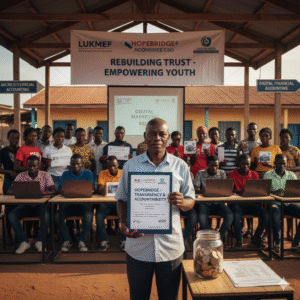
Before joining LUKMEF’s training, HopeBridge, a small NGO in the Littoral region, was on the brink of collapse. Its founder, Mr. Tchinda, recalls losing donor trust after poor financial reporting and disorganized implementation. The organization had vision but lacked systems. LUKMEF’s institutional capacity sessions on accounting standards, data management, and monitoring completely changed their outlook. With mentorship, HopeBridge developed an internal audit policy, opened a transparent financial account, and digitized their reporting process. The difference was immediate—staff morale improved, and donor confidence began to return. Through a small LUKMEF grant, HopeBridge launched a project on youth entrepreneurship, training 50 young people in Douala on digital marketing and microenterprise development. Today, HopeBridge has regained its credibility and is part of a regional CSO network where it shares best practices with peers. “LUKMEF didn’t just teach us how to manage funds—they taught us how to rebuild trust,” says Mr. Tchinda. The organization now plans to expand to other divisions, serving as a model for transparency and resilience.

From Isolation to Connection — Building a National CSO Network

When the crisis deepened in the North West and South West regions, many community-based organizations became isolated—cut off by insecurity and poor communication. But through LUKMEF’s continuous coaching and creation of digital networking platforms, this isolation began to fade. One of the most transformative stories is that of Beatrice, who led a grassroots women’s cooperative in the remote town of Ndu. Before the project, Beatrice’s group worked alone, struggling to access training or funding. When she joined LUKMEF’s online CSO network through WhatsApp and the LACSODEC platform, she suddenly found herself connected to over 1,000 peers nationwide. Through these exchanges, she learned new fundraising approaches, collaborated on joint proposals, and gained mentorship from experienced CSO leaders. Her cooperative soon became part of a regional women’s network advocating for peace and livelihood restoration. Beatrice’s story reflects the broader impact of digital inclusion and networking—transforming isolation into collective strength. “We may live in crisis zones,” she says, “but through this network, we know we are not alone.” Would you like me to format these five stories into a publication-style layout (with titles, quotes, and images placeholders) for inclusion in a report or newsletter?