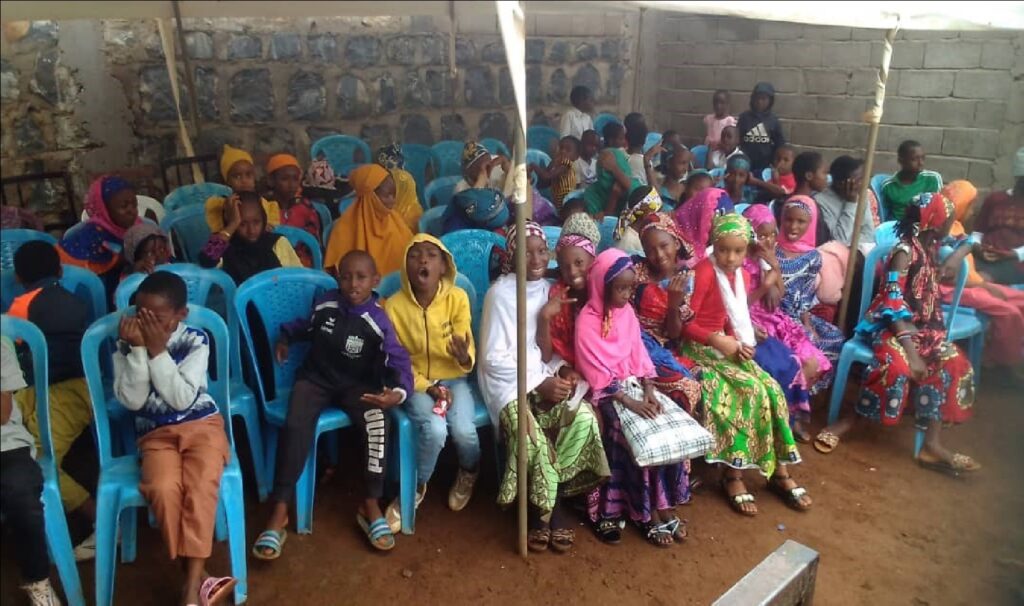
Responding to the Urgent Protection and Education Needs of Children and Adolescent Boys and Girls in the Northwest and Southwest Regions of Cameroon

Responding to the Urgent Protection and Education Needs of Children and Adolescent Boys and Girls in the Northwest and Southwest Regions of Cameroon

Problem Analysis

The protracted armed conflict in the Northwest and Southwest (NWSW) regions of Cameroon has evolved into one of the most devastating humanitarian crises in the country’s history. For nearly a decade, persistent violence, insecurity, and displacement have eroded the social fabric of communities and created a generation of children growing up amidst trauma, fear, and uncertainty. Entire families have been uprooted, livelihoods shattered, and basic social services especially education and child protection severely disrupted. Over 715,000 people have been displaced across the two regions, with children and adolescents bearing the heaviest burden of the conflict’s consequences.

The crisis has produced an alarming protection emergency. Thousands of children have been separated from their families, exposed to violence, forced labor, and sexual exploitation, or compelled into child marriage as a means of survival. Many live in constant fear, deprived of education and psychosocial stability. Internally displaced families, often hosted by already impoverished communities, struggle to meet even the most basic needs. Schools have been burned, teachers threatened, and health facilities rendered inoperable, leaving young boys and girls without access to safe learning spaces or healthcare. Social norms have further deteriorated, exposing women and girls to heightened risks of gender-based violence.

This humanitarian deterioration was compounded by an acute lack of community-based protection systems and psychosocial support mechanisms. The absence of functional referral pathways left survivors of abuse and neglect without access to critical services. Community members, though willing, lacked the skills and coordination to respond effectively to child protection risks. The conflict’s psychological toll on children manifested through depression, anxiety, and withdrawal demanded urgent intervention to restore hope, dignity, and resilience.

It was against this background that LUKMEF–Cameroon, with funding from UNICEF and ECHO, designed and implemented the project “Responding to the Urgent Protection and Education Needs of Children and Adolescent Boys and Girls in the Northwest and Southwest Regions of Cameroon.” The project sought to restore a sense of normalcy and safety for children through psychosocial support, child-friendly spaces, dignity interventions for adolescent girls, life skills development, and community-based protection strengthening. The initiative aimed to rebuild protective environments where children could play, learn, and heal, while empowering communities to take collective responsibility for their protection.

The results speak volumes. Over 38,000 children, caregivers, and community members directly benefited from interventions ranging from psychosocial support, case management, and dignity kit distribution to large-scale sensitizations on child protection and prevention of sexual exploitation and abuse. The project not only improved individual well-being but also strengthened local structures, instilling resilience and collective accountability within communities most affected by the crisis.

The outcomes of this intervention simply demonstrate how much impact can be achieved when resources meet the will. The LUKMEF–UNICEF partnership proved that targeted support, delivered through local structures and rooted in community ownership, can transform despair into resilience, and vulnerability into empowerment. However, the needs remain vast, and many more children still require protection, care, and hope.

LUKMEF–Cameroon therefore calls on partners, donors, and development agencies to join hands to scale up or replicate this life-changing initiative across other affected communities. Together, we can expand this impact and ensure that no child is left behind in the recovery of the NWSW regions.

Contact: partnerships@lukmefcameroon.org
Tel/WhatsApp: +237 677 947 449
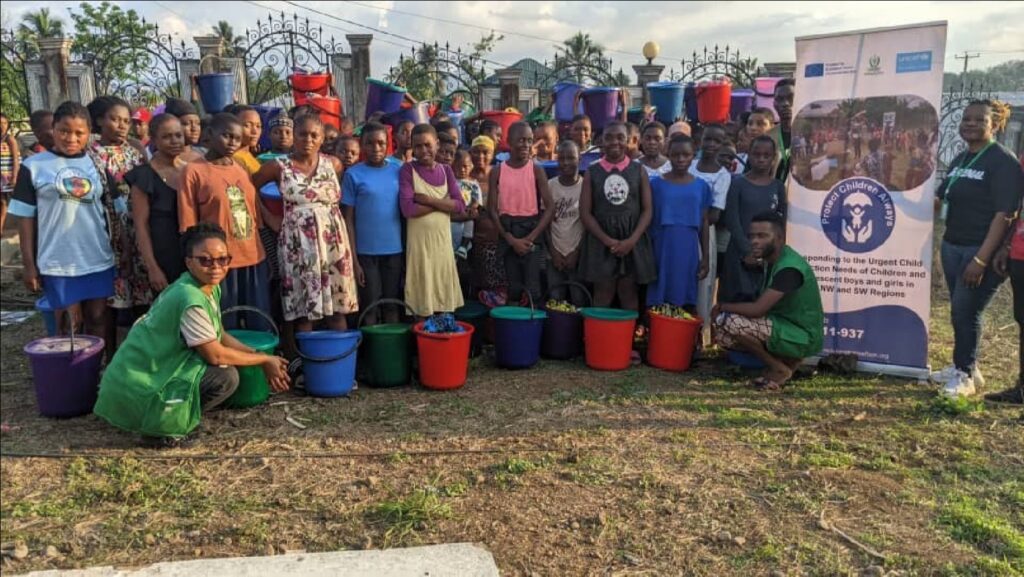
Responding to the Urgent Protection and Education Needs of Children and Adolescent Boys and Girls in the Northwest and Southwest Regions of Cameroon

Start Date

20231025

End Date

20240531

Budget

Donor

UNICEF / ECHO

Coordinator

Tanyi Christian

Sector

Related Pillars

Related SDGs

Region

  • South West
  • North West

Localities

The project was implemented across two regions (NW & SW), covering six divisions and ten main communitiesMabeta Njanga, Wututu, Kumba Town, Okoyong, Besongabang, Egbekaw in the south west and  Ntenefor, Small Babanki, Baba I, and Babessi, Fujua in the Northwest with Bonadikombo serving as a previous implementation site.

Beneficiaries

  • Total direct beneficiaries: ≈38,000 persons (including children, adolescents, and adults).
  • Females represented the majority (≈56%), emphasizing gender-sensitive programming.
  • Persons with disabilities (PLWD): at least 40 beneficiaries across multiple activities.
  • IDPs: over 10,000 reached, mainly children and adolescent girls.
  • Host Communities: over 20,000 reached, showing wide integration and inclusion.
  1. Provide Psychosocial Support (PSS) Services
    • Ensure that children and caregivers access psychosocial support through Psychosocial Support Units (PSSUs), Child-Friendly Spaces (CFS), and Adolescent Clubs.
    • Build emotional resilience and mental well-being among affected children and families.
  2. Deliver Case Management Services
    • Identify, register, and support the most vulnerable conflict-affected children, including survivors of violence, exploitation, and abuse.
    • Provide individual case management, referrals, and alternative care (for unaccompanied and separated children).
  3. Strengthen Community-Based Child Protection Mechanisms (CBCPMs)
    • Train and empower community members (CBCPC members, CBAs, and animators) to prevent, identify, and respond to child protection issues.
    • Promote awareness on Child Protection (CP), Gender-Based Violence (GBV), and Prevention of Sexual Exploitation and Abuse (PSEA).
  4. Promote Gender Equality and Inclusion
    • Apply a gender-sensitive approach ensuring active participation of men, women, boys, girls, and people with disabilities in all project stages.
    • Distribute 1,000 dignity kits to vulnerable adolescent girls to promote hygiene, dignity, and school participation.
  5. Enhance Education and Life Skills
    • Support life skills training, financial literacy, and comprehensive sexuality education to help adolescents make informed life choices and prevent early marriage.
  6. Foster Community Awareness and Engagement
    • Sensitize communities (over 30,000 people reached) on child protection risks and reporting mechanisms to create safer environments for children.
  7. Strengthen Monitoring, Evaluation, and Learning (MEAL)
    • Develop and apply a robust system for tracking progress, ensuring accountability, and documenting lessons learned for future child protection interventions.
The project achieved significant outcomes across all planned indicators. Over 2,500 children participated in Child-Friendly Space activities, receiving psychosocial support and structured recreation. 773 caregivers were reached through parenting programs promoting positive child-rearing, while 2,008 adolescents completed life-skills and sexuality education sessions, exceeding targets. 989 vulnerable children received individual case management, and 403 survivors of violence or neglect were referred for specialized services. 46 unaccompanied or separated children were reunified or placed in alternative care, while 1,000 dignity kits supported adolescent girls’ hygiene and self-esteem. 113 community child-protection committee members were trained, and over 30,000 people were sensitized on Child Protection (CP), Gender-Based Violence (GBV), and PSEA. These results reflect strengthened community mechanisms, improved child safety, and greater psychosocial resilience among children and caregivers in crisis-affected areas of Cameroon.
The project faced several operational and contextual challenges. Delayed fund disbursement caused late implementation and compressed timelines, while insecurity in some communities limited access and staff mobility. The withdrawal of some CBCPC members due to lack of financial motivation disrupted sensitization efforts, necessitating re-engagement strategies. High expectations for material assistance from caregivers and adolescents reduced participation in psychosocial activities. Limited field staff and PSSUs made it difficult to cover large, dispersed communities effectively. Shortages of dignity kits left some vulnerable girls unreached, and weak coordination between case workers and CBCPCs initially hampered case referrals. The volatile security situation and poor road infrastructure also delayed supervision and monitoring. Despite these issues, adaptive planning, intensified awareness, and the involvement of community volunteers mitigated some gaps, ensuring that key protection and education objectives were largely achieved within the project’s duration.
Key lessons highlight that community participation is critical for sustainability. Engaging local actors—parents, teachers, and traditional leaders—built ownership and trust, ensuring smoother project delivery. The child-centered and gender-sensitive approaches proved effective in addressing diverse vulnerabilities, emphasizing the need to tailor interventions to context, gender, and age. Regular monitoring, feedback, and adaptation improved service delivery and responsiveness, particularly in unstable security settings. Collaboration between CBCPC members, animators, and case workers enhanced referrals and protection outcomes, though it required consistent re-training. Integrating psychosocial, educational, and livelihood elements increased overall family resilience. Finally, coordination with UNICEF, ECHO, and other partners ensured efficient resource use and avoided duplication. The project demonstrated that holistic, locally led, and flexible programming best supports children and adolescents facing displacement and violence in humanitarian contexts.
Future programming should prioritize timely funding disbursement and longer implementation periods to sustain impact. Providing modest stipends or incentives to CBCPC members would boost motivation and retention, improving community engagement. Increasing the number of field staff and psychosocial units would enhance service coverage, while more dignity kits and educational materials should be budgeted to meet high demand among vulnerable girls. Strengthening coordination and referral systems between case workers, community structures, and local authorities is vital for continuity of care. Programs should integrate livelihood and resilience-building components for caregivers to reduce dependency and enhance stability. Expanding child protection awareness in schools and religious institutions would further prevent abuse. Finally, regular capacity-building, monitoring, and feedback sessions should remain central to future interventions, ensuring adaptive, gender-inclusive, and community-driven responses to the evolving protection and education needs in conflict-affected regions of Cameroon.

Success Stories

A Mother’s Strength — Transforming Parenting in Crisis

In Besongabang, Agnes, a mother of five, once believed strict discipline was the only way to control her children amid chaos. Displacement, hunger, and trauma had made her impatient. When she attended LUKMEF’s positive parenting sessions, she learned about communication, empathy, and non-violent discipline. Initially skeptical, she tried one exercise—listening without shouting. The change startled her. “My children started talking to me again,” she recalled. Over several sessions, she joined other caregivers in learning emotional support techniques. The parenting classes became more than training—they became healing circles where caregivers shared pain and strength. Now, Agnes leads informal neighborhood sessions, reminding other parents that children also carry scars of conflict. Her story reflects how empowering caregivers with psychosocial knowledge creates safer, more nurturing homes even in displacement, turning victims of war into protectors of peace.

A Mother’s Strength — Transforming Parenting in Crisis

Linda, 16, lived in a crowded shelter in Kumba after fleeing her community. Without access to hygiene products, she often missed school during her period and faced ridicule. When LUKMEF distributed dignity kits to vulnerable adolescent girls, Linda received one. But the true impact came during the accompanying health and self-care education session. For the first time, she learned about menstrual hygiene, self-esteem, and gender respect. “I realized my body is not a shame,” she said. With new confidence, Linda returned to school and began mentoring younger girls, showing them how to manage menstruation with dignity. She now speaks at adolescent club meetings, urging boys to support their sisters instead of mocking them. The simple gift of a dignity kit—and the education around it—transformed Linda’s self-worth, turning her from a shy displaced teen into a proud advocate for girls’ empowerment in her community.

Reunited at Last — The Boy Who Found His Family

Ten-year-old Joseph was separated from his family during a night raid in Okoyong. He was rescued by community volunteers and referred to a LUKMEF case worker, who immediately began tracing efforts. Through collaboration with INTERSOS and local leaders, Joseph’s family was found weeks later in Mamfe. When the reunion day came, Joseph clung tightly to his mother, tears streaming as he whispered, “I thought you were gone.” The family was supported with psychosocial counseling and basic household items to stabilize their reintegration. Case workers continued visits to ensure Joseph’s wellbeing and school attendance. Today, he’s back in class and says he wants to become “a police officer to protect children.” His reunion embodies the heart of child protection—beyond data, it is about restoring families, identities, and futures torn apart by conflict.

From Trauma to Triumph — A Child’s Journey Through Psychosocial Healing
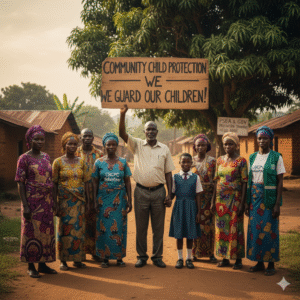
When 12-year-old Clarisse fled her village in the Northwest after armed attacks, she had not spoken a word for weeks. The loss of her father and displacement had left her withdrawn and fearful. When LUKMEF opened a Child-Friendly Space (CFS) in Small Babanki, Clarisse’s grandmother encouraged her to join. At first, she sat alone, clutching her torn dress while other children played. Slowly, the animators engaged her through drawing and singing sessions. They taught her breathing and storytelling exercises that helped her process fear. Over weeks, Clarisse began to smile, play, and even lead group songs. Her favorite activity—painting—became her therapy. “I draw my home before the war,” she said softly. Through consistent psychosocial support, Clarisse regained her voice and confidence. Today, she dreams of becoming an art teacher and helping “other children who forget how to smile.” Her recovery shows how child-centered spaces rebuild not just resilience, but hope itself.

Community Heroes — The Volunteers Who Guard Childhood

In Ntenefor, a group of Community-Based Child Protection Committee (CBCPC) members has become the village’s first line of defense for children. Among them is Mr. Emmanuel, a former teacher who joined the committee after seeing children drop out of school due to fear and trauma. He and his peers patrol neighborhoods, identify abuse cases, and refer survivors to case workers. Their training on PSEA, GBV prevention, and humanitarian principles transformed them into trusted protectors. One evening, they intervened when a 14-year-old girl was nearly forced into early marriage. With support from LUKMEF, the marriage was halted, and the girl returned to school. “We realized protection starts with us,” Emmanuel said proudly. Their commitment demonstrates how community ownership ensures sustainability. These unsung heroes prove that when communities are empowered, protection becomes a shared culture, not just a project goal.